
Fighting Christmas Tree Contagions
What’s prickly, green, and can sneakily steal away the holiday season? If you answered “The Grinch”, you’d be off the mark. With the holidays approaching quickly, major health concerns can threaten the festive spirit: The relentless winter flu and norovirus season and an additional, more unexpected allergen source: Your Christmas tree.
The seasonal influenza and norovirus outbreaks – a yearly challenge for public health – can lead to debilitating symptoms like high fever, body aches, and fatigue, making it difficult to enjoy gatherings or travel to visit loved ones. Simultaneously, the introduction of a live (or even artificial) evergreen tree into your home can trigger Christmas Tree Syndrome, a surprising array of respiratory issues on top of the cold-weather risks.
The Flu: Stopping the Virus at the Source
Influenza, an enveloped virus, spreads rapidly in indoor environments during cold weather, especially during holiday gatherings where the risk of transmission can be amplified. Standard cleaning methods often miss critical surfaces due to their complexity or inaccessibility. This is where the unique technology of SteraMist’s ionized Hydrogen Peroxide (iHP) shines.
SteraMist uses a low concentration of hydrogen peroxide (around 7.8%) that passes through a cold plasma arc, splitting hydrogen peroxide molecules to create a mist rich in nature’s strongest disinfectant: Reactive Oxygen Species (ROS) that consist primarily of hydroxyl radicals (OH).
By deploying SteraMist as a disinfection fogger, you ensure that every surface is effectively and reliably treated, rapidly eliminating the flu virus from the entire room environment, providing a much higher level of confidence than manual cleaning and other methods.
Norovirus: The Uninvited Holiday Guest
While influenza may be the most talked-about winter virus, norovirus is perhaps the most notorious for causing highly disruptive outbreaks, often referred to as the “winter vomiting bug.” This highly contagious, non-enveloped virus is extremely resilient and requires a powerful disinfectant to inactivate it. Norovirus is particularly problematic during the holidays because:
- High Contagion Rate: It spreads quickly through direct contact with an infected person, contaminated food or water, and touching contaminated surfaces.
- Viral Resilience: Unlike many enveloped viruses (like the flu), non-enveloped viruses, such as norovirus, are far more resistant to common household cleaners and alcohol-based sanitizers.
- Holiday Buffets & Crowds: Increased food handling and close proximity during holiday gatherings create perfect transmission conditions.
SteraMist, being an EPA-registered broad-spectrum disinfectant, is proven to inactivate norovirus on surfaces, providing a critical layer of environmental protection where hand hygiene alone falls short. This capability is critical for achieving a high level of disinfection assurance in environments prone to norovirus outbreaks, helping to prevent the rapid spread of this highly resilient microorganism during the festive season.
The Christmas Tree Syndrome
While families across the world gather around the tree during Christmastime, that same tree can host a wide variety of allergens that can wreak havoc on gatherings. Whether the tree is real or artificial, respiratory and skin allergies can flare when exposed to terpenes (the compounds responsible for the smell of pine), pollen, or mold – the most significant allergen of all. These risks all combine to create Christmas Tree Syndrome.
Real Christmas trees are grown outdoors and naturally harbor mold spores (including Aspergillus, Penicillium, and Cladosporium), dust, and outdoor pollen. When the tree is brought inside, jostling the tree can cause mold can flourish and rapidly increase in airborne spore counts within the warm, indoor environment. A study conducted by researchers at St. Vincent’s Medical Center in Bridgeport, Connecticut, investigated the effect of a fresh Christmas tree on indoor air quality.
- Baseline Levels: Mold spore counts in the room were initially measured to be around 800 spores per cubic meter (35 cubic feet) of air.
- Rapid Increase: Within 14 days of the live tree being placed indoors, the mold spore count was found to have risen dramatically to 5,000 spores per cubic meter.
- Magnitude of Increase: This represents an increase of more than five times the initial measurement. As allergist and immunologist Philip Hemmers noted, these high levels have been correlated with allergic rhinitis and an increased rate of asthma symptoms.
This research indicates that the warm indoor environment causes the mold spores naturally present on the bark and needles of the tree to thrive and release a significantly higher concentration of spores into the air by up to five times (or more) within two weeks of a tree being indoors, a phenomenon often described as Christmas Tree Syndrome.
Artificial trees are not immune either, as they often accumulate significant amounts of dust and mold spores while being stored in attics or basements for the rest of the year.
Creating a Healthy Atmosphere for the Holidays
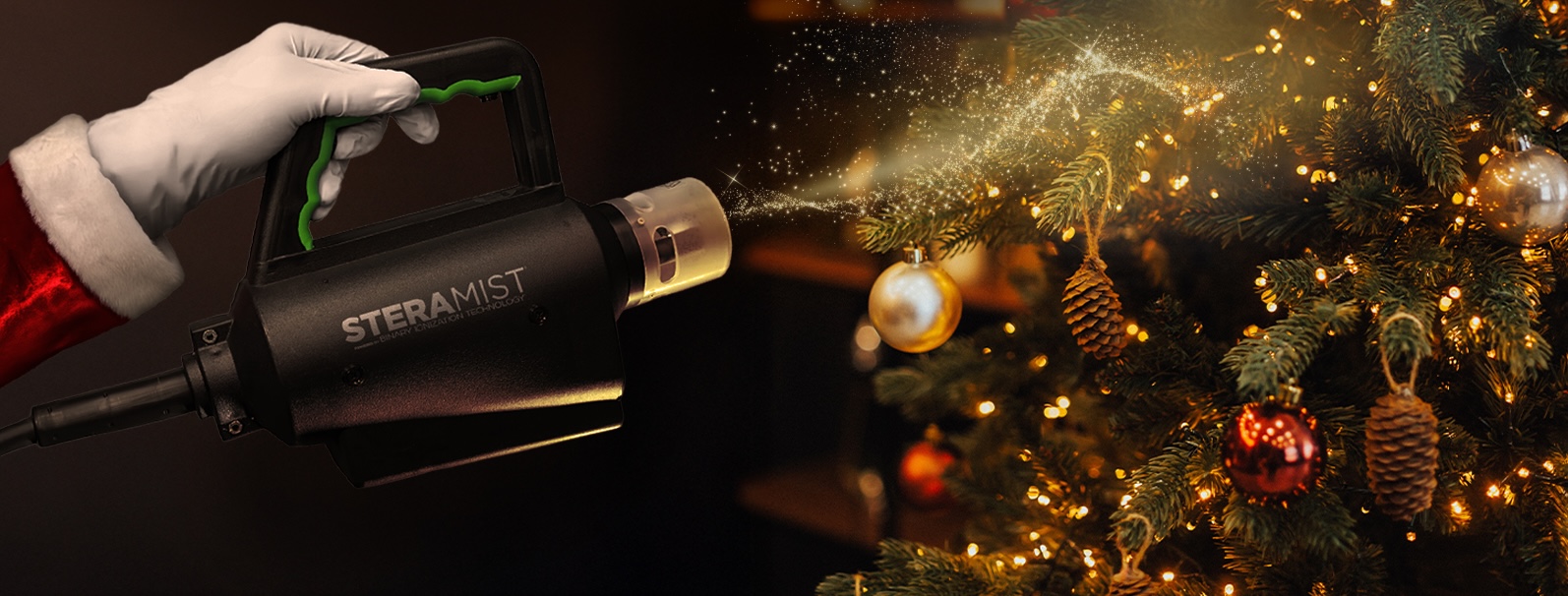
Normally, while the primary treatment for tree-related allergies is to remove the tree or clean it before putting it up, SteraMist offers a simple solution for microbial remediation. Its commercial sanitizing fogger technology is proven to inactivate mold spores and fungal organisms. Treating the environment (including the decorations) with SteraMist can help reduce the spore load on surfaces and in the air, complementing other measures like air purifiers and cleaning to mitigate the risk of allergic reactions and provide a cleaner, healthier air for your family. Remaining vigilant against both infectious disease and environmental allergens is crucial for ensuring a truly happy and healthy holiday season for you and your loved ones.

The Invisible War
Protecting Your Space from Flu subclade K and Emerging PathogensWhen one reads the word “War,” one first thinks of armies, explosions, crippling power grids, disruption of information systems, broken financial systems, and government networks. Rarely do you hear about “The Invisible War”…
The Risks of Residues
Why What’s Left Behind Matters“Clean” often implies “safe.” But what if the very products designed to make spaces safe are leaving behind hidden dangers? Disinfection residues, often invisible to the naked eye, can have significant implications for health, material integrity, and even the effectiveness…
Expanding the Potential of Peroxide
The New FDA Amendment on Hydrogen PeroxideAs of September 3, 2025, the Food & Drug Administration (FDA) introduced a significant regulatory update that will transform how we approach food industry safety and disinfection. This new amendment to food additive regulations officially expands the approved…