
Do Mold Foggers Work? What Remediation Professionals Need to Know
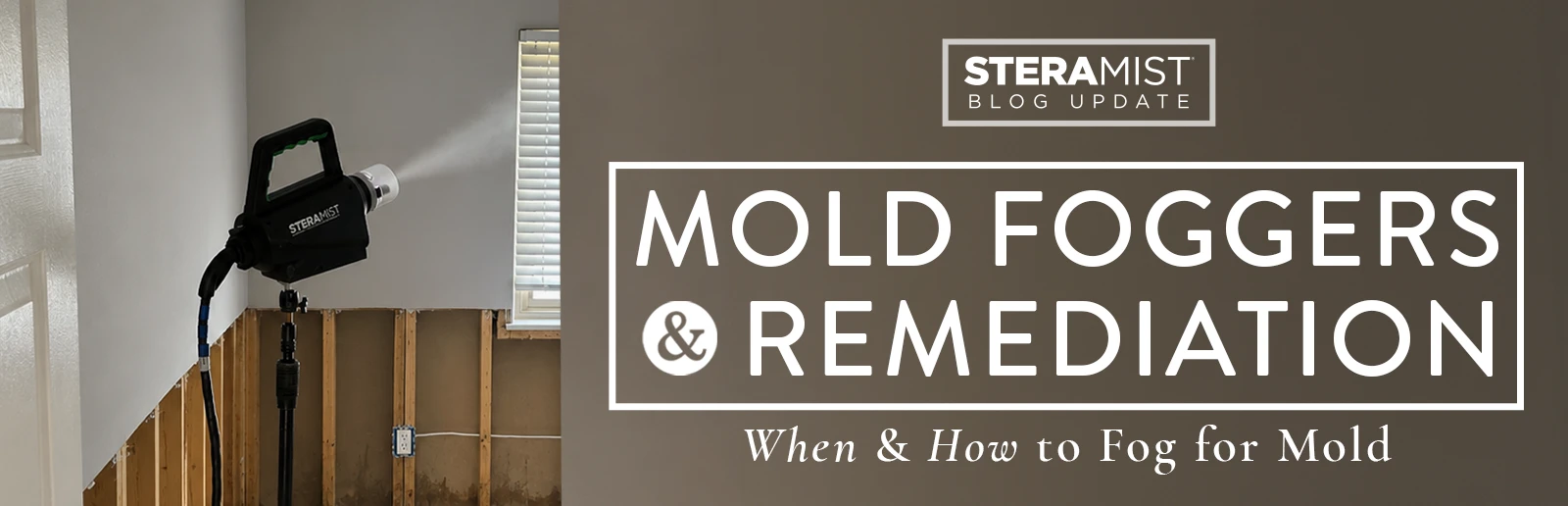
Fogging alone does not remediate mold. Mold growth is driven by moisture, and professional remediation guidance, including EPA guidance and the IICRC S520 standard, centers on fixing the water source, containing the area, and physically removing contaminated materials. Fogging can play a supporting role after removal, treating hard surfaces and air spaces, when the product’s EPA label permits that use.
Mold foggers are heavily marketed as a fast fix. For restoration and remediation professionals, the real question is not whether to fog, but where fogging fits inside a process that will actually hold up.
What is a Mold Fogger?
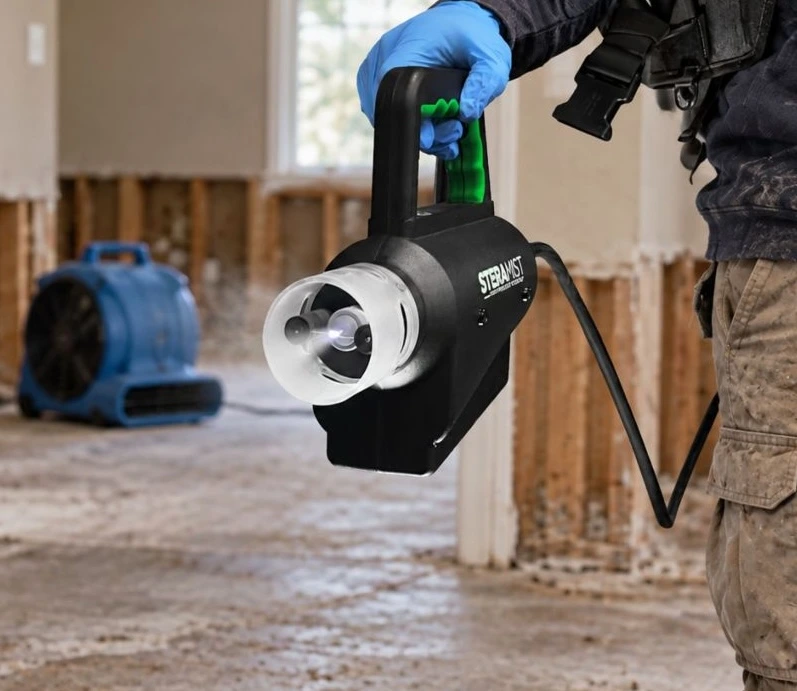
A mold fogger is a device that disperses a liquid antimicrobial product as fine droplets through a room. Products and devices vary widely, and each product’s EPA label determines which organisms it is registered against, which surfaces it can be used on and whether fogging is a permitted application method.
Can You Fog Away Mold?
Not on its own. Three reasons:
- Moisture comes first. If the water source is not fixed, mold returns.
- Porous materials hold growth inside. Drywall, ceiling tiles, and carpet with mold growth generally need to be removed, not surface-treated.
- Dead mold can still cause problems. Non-viable mold particles can remain allergenic, so physical removal and cleaning still matter.
Fogging vs. Removal vs. Whole-Room Treatment
Each approach does a different job. Here is how they compare inside a professional remediation project.
| Approach | What it does | What it doesn’t do | Where it fits |
| Fogging alone | Disperses an antimicrobial product across exposed surfaces and air | Fix moisture, reach growth inside porous materials or remove non-viable particles | Not a standalone remediation method |
| Removal and cleaning | Removes contaminated porous materials; HEPA-vacuums and damp-wipes hard surfaces | Correct the moisture source on its own | The core of remediation under EPA guidance and IICRC S520 |
| Post-removal whole-room treatment | Treats remaining hard surfaces and air spaces with a label-approved product | Replace removal or cleaning | After removal and cleaning, before post-remediation verification |
The Professional Mold Remediation Process
Step 1: Find and fix the moisture source
Repair leaks, address condensation and dry wet materials, ideally within 24–48 hours of water intrusion, in line with EPA’s water damage guidelines.
Step 2: Assess and contain the area
Determine the extent of growth, then isolate the work area with containment and negative air pressure to prevent spore spread.
Step 3: Remove contaminated porous materials
Bag and remove moldy drywall, insulation, ceiling tiles and other porous materials that can’t be cleaned.
Step 4: Clean hard surfaces
HEPA-vacuum and damp-wipe non-porous and semi-porous surfaces to physically remove mold.
Step 5: Dry the structure
Use dehumidifiers and air movers to bring materials back to acceptable moisture levels, confirmed with moisture meters.
Step 6: Post-remediation treatment and verification
After removal and cleaning, a label-approved whole-room treatment can address remaining hard surfaces and air spaces. Post-remediation verification, often by an independent assessor, confirms the job is complete.
Where Whole-Room Treatment Fits in Mold Remediation
Whole-room treatment is most valuable after source removal: reaching hard surfaces, cavities and air spaces that manual cleaning can miss, and addressing bacteria introduced by water damage.
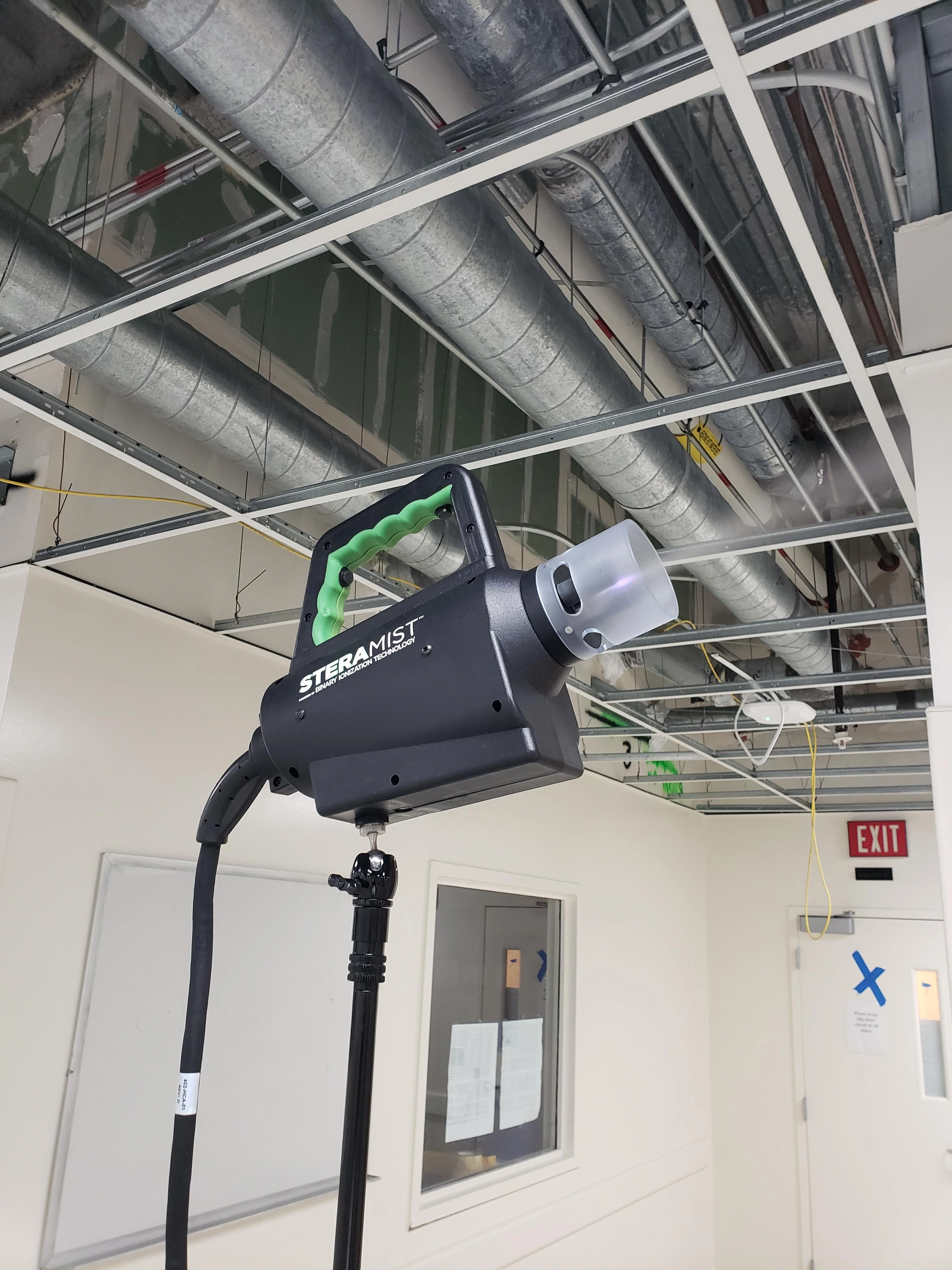
In SteraMist’s mold and mildew fogging protocol, iHP treatment comes only after the area is contained, visible mold is scrubbed and wiped, affected materials are bagged and surfaces are HEPA-vacuumed. Technicians then open drawers, cabinets, closets and bagged items held inside containment, and the SteraMist Environment System treats the full contained area. After the dwell time, a HEPA air scrubber aerates the space, and a hydrogen peroxide monitor must read below 1.0 ppm before anyone re-enters. A final HEPA vacuum of treated contents and a logged application record complete the job.
Mold Remediation Equipment Checklist
- Moisture meters and thermal imaging cameras
- Containment barriers and negative air machines
- HEPA air scrubbers and HEPA vacuums
- Dehumidifiers and air movers
- Personal protective equipment, including respirators
- An EPA-registered whole-room treatment system labeled for the intended use
- A hydrogen peroxide monitor to confirm safe levels before re-entry, when using an H₂O₂-based treatment
SteraMist for Restoration Professionals
Restoration companies use SteraMist iHP after water damage and other events to help make properties ready to be reoccupied. SteraMist fits within the mold remediation process after the moisture source is fixed and contaminated materials are removed.
A dry mist, not a wet fog
Conventional foggers disperse wet droplets that can settle unevenly and leave surfaces damp. SteraMist’s patented ionized Hydrogen Peroxide (iHP) converts a low concentration of hydrogen peroxide into a dry, submicron mist of reactive hydroxyl radicals. That mist disperses throughout the space, reaching hard surfaces, cavities and non-line-of-sight areas that wipes and sprays can miss, without rewetting a structure you’ve just dried.
Fast turnover on the job site
There is no wiping, rinsing, or mixing. Crews can treat a single surface with a handheld unit or a full room with automated equipment, so post-removal treatment adds minimal time before post-remediation verification and helps return properties to occupants sooner.
Safe for contents and equipment
SteraMist iHP is non-corrosive and residue-free, which matters when a job includes electronics, furnishings, documents, or other contents your client wants to keep. The same treatment that addresses the room is compatible with the assets in it.
Backed by validated science
SteraMist BIT Solution is EPA-registered as a hospital-healthcare disinfectant (EPA Reg. No. 90150-2), with an independently validated 6-log reduction against bacteria, viruses, and spores. Every claim is tied to the registered label, so you can show customers, adjusters, and assessors exactly what the treatment is registered to do. Each application ends with a hydrogen peroxide level check and a logged record, giving you documentation for every job.
A network behind your business
The SteraMist Pro Certified program gives restoration companies on-demand iHP training, recognition as an iHP disinfection expert in their market, and affiliate resources, including a course on marketing and selling SteraMist services. It’s built to help you add iHP as a service line, not just buy equipment.
Frequently Asked Questions
Do mold foggers kill mold?
Some products are registered against specific fungi, but fogging alone does not remediate a mold problem. Moisture control and physical removal come first. Always check the product’s EPA label for registered organisms and permitted application methods.
Can I fog instead of removing moldy drywall?
No. Porous materials with mold growth generally need to be removed. Fogging does not reach growth inside materials.
Does fogging help with odors after water damage?
Yes, as part of the process. SteraMist BIT Solution is EPA-registered for deodorization, so a whole-room iHP treatment can help address odors on hard surfaces and in air spaces after water damage. Odors held in wet or contaminated porous materials still need to be removed at the source, so treatment works alongside removal and drying, not in place of them.
What equipment do mold remediation professionals need?
Moisture-detection tools, containment and negative-air systems, HEPA filtration and vacuums, drying equipment, PPE, and a label-approved treatment product for post-removal use.