
VHP Decontamination System
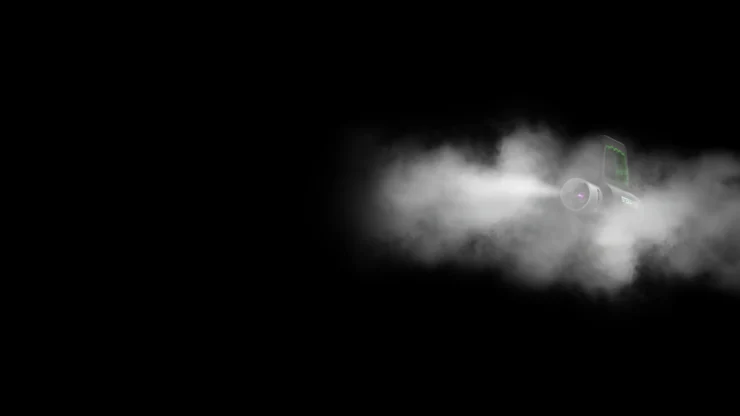
Understanding Vaporized Hydrogen Peroxide Decontamination
Vaporized Hydrogen Peroxide (VHP) has long been an industry staple for achieving high-level decontamination in controlled environments. This VHP sterilization process is commonly utilized in pharmaceutical cleanrooms, research laboratories, and healthcare facilities to eliminate a broad spectrum of biological contaminants.
While traditional VHP decontamination systems are effective, modern facilities are increasingly evaluating how these legacy processes compare to newer innovations in ionized Hydrogen Peroxide (iHP) technology regarding speed, safety, and material compatibility.
Beyond Vaporized Hydrogen Peroxide: Faster, Non-Corrosive Decontamination
While standard VHP systems are industry staples, SteraMist ionized Hydrogen Peroxide (iHP) technology delivers 6-log efficacy with significantly faster cycle times and better material compatibility.
Scientific Validation: Proven Performance
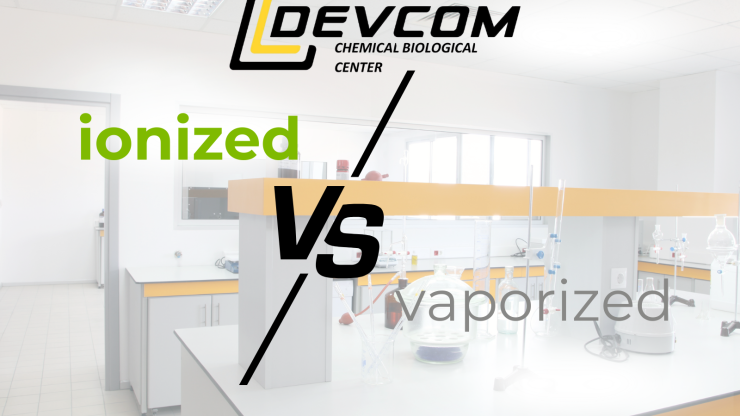
A validation study by the DEVCOM Chemical Biological Center evaluated the efficacy of SteraMist iHP against high-level biological threats. The results confirm that SteraMist provides a superior alternative to legacy hydrogen peroxide vapor decontamination.
The VHP vs. iHP Breakdown
How does SteraMist iHP compare to VHP in cycle speed? The speed difference is significant.
- VHP: Traditional systems typically require a four-phase cycle: Dehumidification, Conditioning, Sterilization, and Aeration. This process can take several hours because the environment must be tightly controlled to prevent condensation.
- SteraMist iHP: Does not require pre-conditioning or dehumidification. Research indicates iHP achieves neutralization in a fraction of the time, whereas VHP systems can require up to 13–16 hours for certain biological threat applications.
Is iHP safer for electronics than VHP? Yes.
- VHP: Systems operate by saturating an environment with a gas that can become corrosive if it condenses. Over repeated cycles, it can oxidize metals and degrade plastics or rubbers.
- SteraMist iHP: A “dry” mist that behaves like a gas but acts on contact. It is non-corrosive and leaves no residue, making it the preferred choice for sensitive laboratory electronics, medical equipment, and aerospace components used at the NASA Johnson Space Center.
What are the main material compatibility differences? Because iHP has a much shorter contact time (seconds vs. hours) and uses a lower chemical concentration, it is significantly gentler on materials.
- VHP: Requires a hazardous 35% H2O2 solution.
- iHP: Utilizes a specialized BIT™ solution with less than 8% hydrogen peroxide, making it safer to transport and handle while remaining safe for stainless steel and high-tech circuitry.
Scientific Validation: Proven Performance
A validation study by the DEVCOM Chemical Biological Center evaluated the efficacy of SteraMist iHP against high-level biological threats. The results confirm that SteraMist provides a superior alternative to legacy hydrogen peroxide vapor decontamination.
“Overall, iHP decontamination using the TOMI SteraMist technology is a promising methodology for more rapid biological toxin remediation.”
Frequently Asked Questions
- How does a VHP decontamination system work? Traditional VHP works by vaporizing liquid hydrogen peroxide and circulating it throughout a sealed room to achieve sterilization. It requires strict environmental controls to prevent the gas from condensing into a corrosive liquid.
- What are the primary alternatives to VHP? The leading alternative is ionized Hydrogen Peroxide (iHP). Unlike VHP, iHP uses a cold plasma arc to generate hydroxyl radicals, allowing it to penetrate complex spaces without the need for pre-conditioning or dehumidification.
- Does VHP require a sealed room for cleanroom decontamination? Yes, traditional VHP requires the area to be completely sealed with the HVAC system turned off. SteraMist iHP offers more flexibility; while it requires a disabled HVAC for automated fogging, it can also be used as a surface spray in open environments.
- Is VHP safe for all materials? VHP can be corrosive to certain metals and may degrade polymers over time due to long exposure cycles. iHP is considered a “dry” technology and is safer for sensitive electronics and delicate materials.